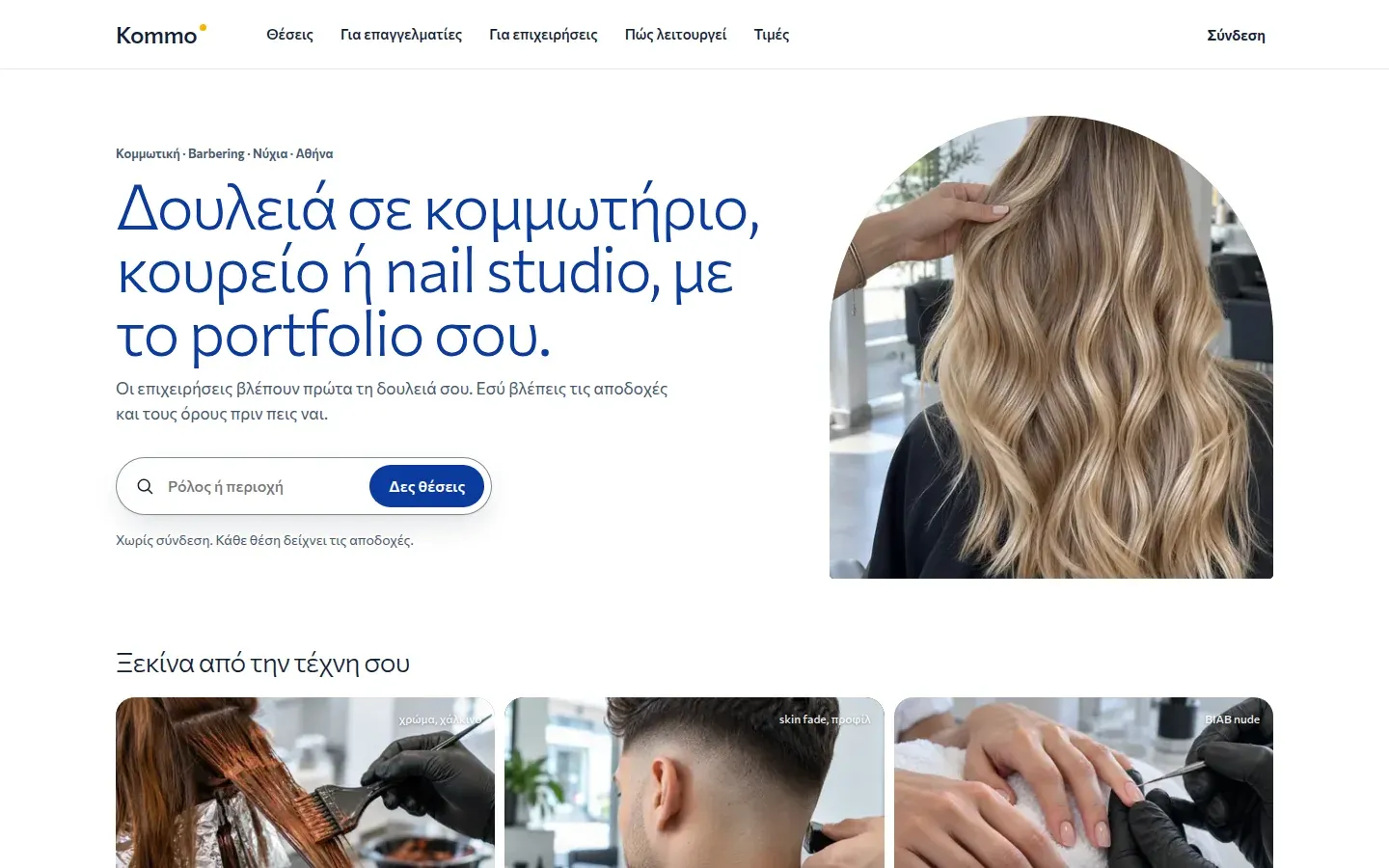
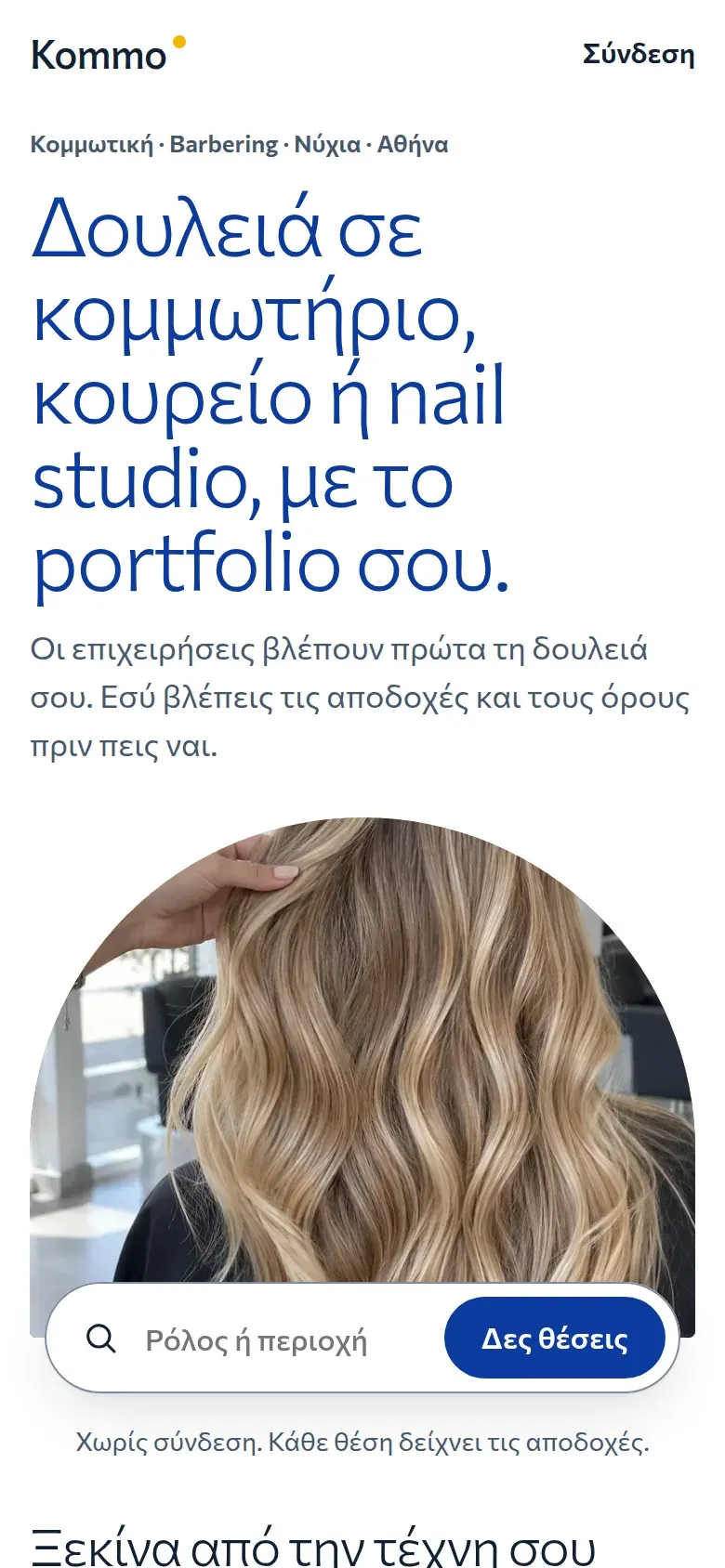
Kommo started from a simple observation: salons hire through Instagram stories, Facebook groups and word of mouth, and a CV tells you little about a hairdresser. So Kommo puts the work first. It is live at kommo.gr, and it is a product we built and run ourselves.
Who is Kommo for, and what problem does it solve?
It has two sides.
- Professionals (stylists, barbers, nail technicians, assistants, receptionists) want a place to show their work and find a job with clear terms. Many job ads hide the pay and the hours.
- Businesses (salons, barbershops, nail studios) want to see the quality of someone’s work in a minute, and to fill an empty chair quickly.
How does it work for candidates?
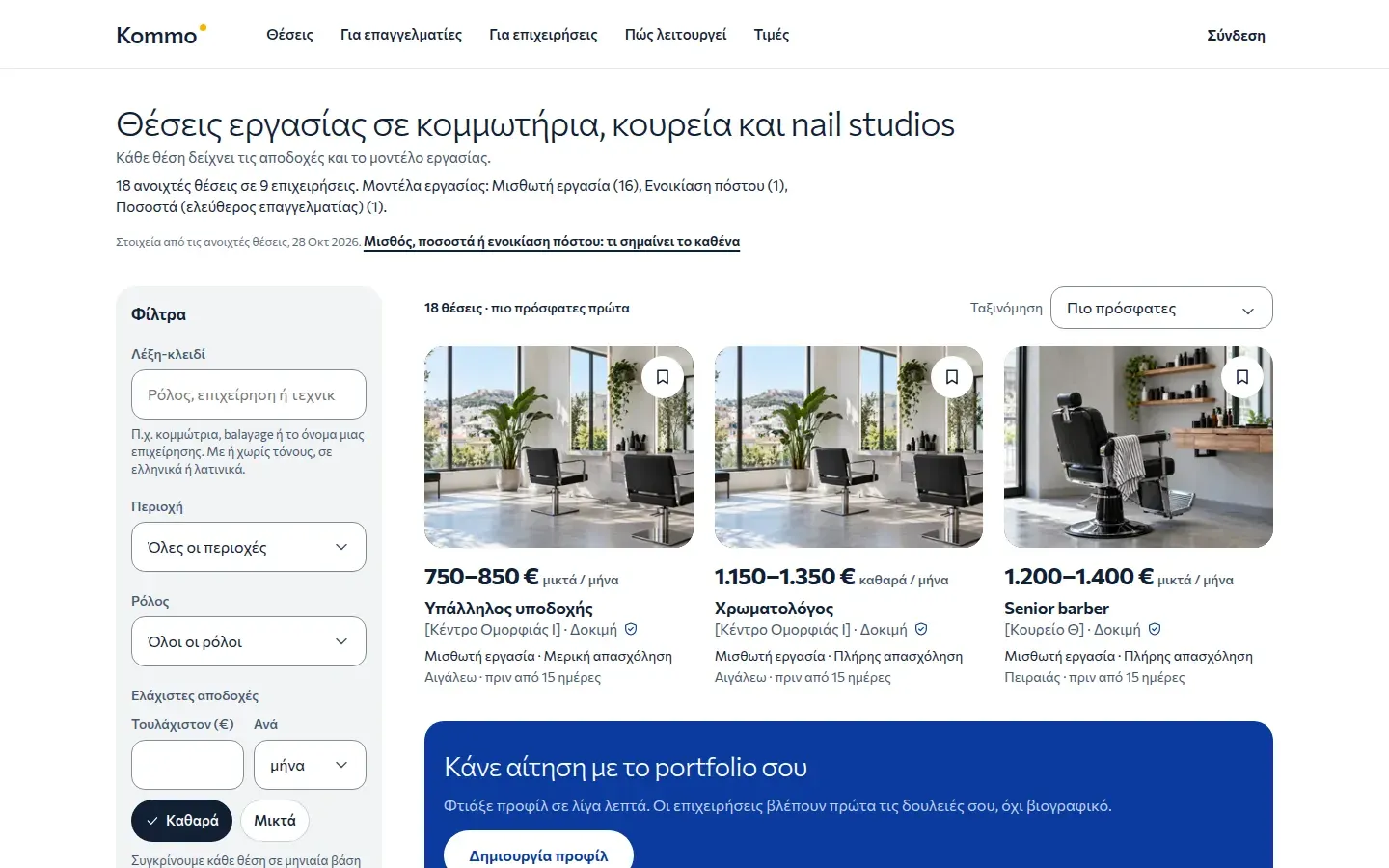
A candidate builds a profile with photos and video of their work. They can browse listings without signing in. Every listing shows the pay range, the period, whether it is gross or net, the work model and the location before anyone applies. Work models include salary, commission, salary plus commission, booth rental and freelance.
Applying takes one tap and sends the portfolio with the application. Candidates can also wait to be invited by a business.
How does it work for salons?
A salon creates its business page and gets verified before it receives the “Verified” badge. It then publishes a listing, reviews applicants by their portfolios, invites candidates it likes, and moves them through interviews and offers. Once the first application arrives, the main terms of a listing (role, location, pay) lock. To change them, the salon closes and reposts the listing, so applicants never see terms change under them. We enforce that rule in the database itself.
What is the notable engineering?
- Location search. PostgreSQL with PostGIS lets candidates search by place and radius across Attica.
- Photo and video pipeline. Uploads go to object storage. Background workers check, resize and convert them, and a video worker running ffmpeg turns portfolio videos into formats that play on a phone. Media passes a moderation queue first.
- Background jobs. pg-boss runs listing expiry, reminders and email in the background, without a second queue service.
- Installable web app. Kommo is a PWA built with Next.js and a Hono API. It installs on a phone and works well on a mobile connection.
What is its status?
Kommo is live, with a free launch period for businesses. The interface is in Greek, as the market is Greece. We do not publish usage numbers here.
What does Kommo show about how we build for clients?
It shows that we can take a two-sided marketplace from specification to a running service: roles and permissions, media handling, search by location, background jobs, hosting and backups. If you need something similar, see our web applications and PWA work, our software services or the other products we run.